
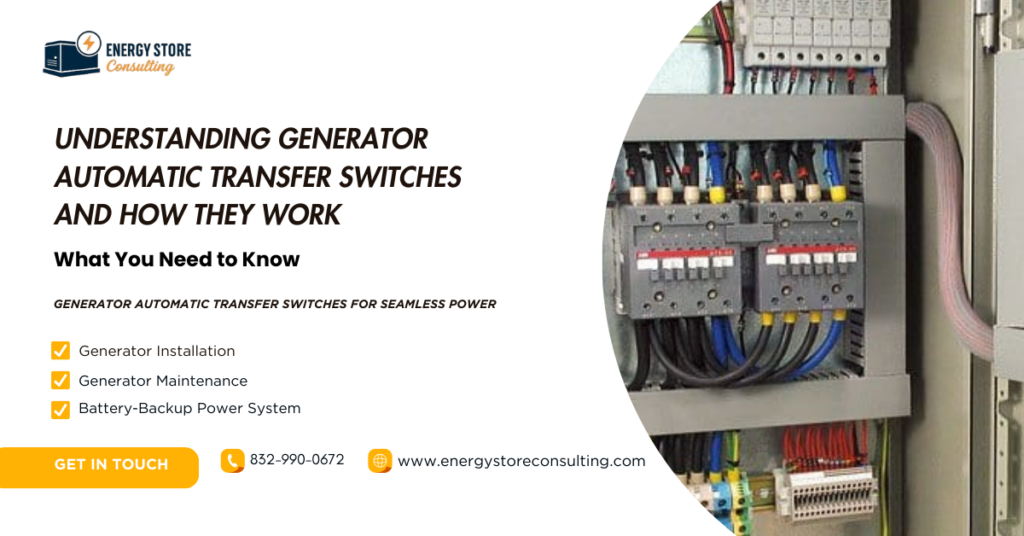
The automatic transfer switch serves as the central control component of your home backup power system. This device monitors your utility connection continuously to detect power interruptions instantly. When grid power fails, the switch signals your generator to start and safely transitions your home’s electrical load to backup power. This generator automatic transfer process completes within seconds, protecting sensitive electronics from voltage fluctuations and dangerous surges. Professional residential transfer switch installation in Houston ensures your home maintains power without requiring manual intervention.
What is an ATS for a Generator and Why It Matters
Maintaining home functionality during severe Texas weather requires more than a generator—it requires seamless power transition. An automatic transfer switch (ATS) enables this capability. Throughout our years installing standby power systems, we have observed that homeowners with manual transfer methods often struggle during actual outages. Attempting to operate manual equipment in darkness and storm conditions creates unnecessary stress and safety risks.
An automatic transfer switch is essentially an intelligent electrical relay positioned between your main service panel and your standby generator. Its primary function involves monitoring incoming utility voltage and frequency. Upon detecting grid failure, it initiates generator startup and transfers your home’s electrical load automatically. This seamless operation distinguishes a true whole-house transfer switch from basic portable generator connections.
How the Generator Power Transfer Process Works
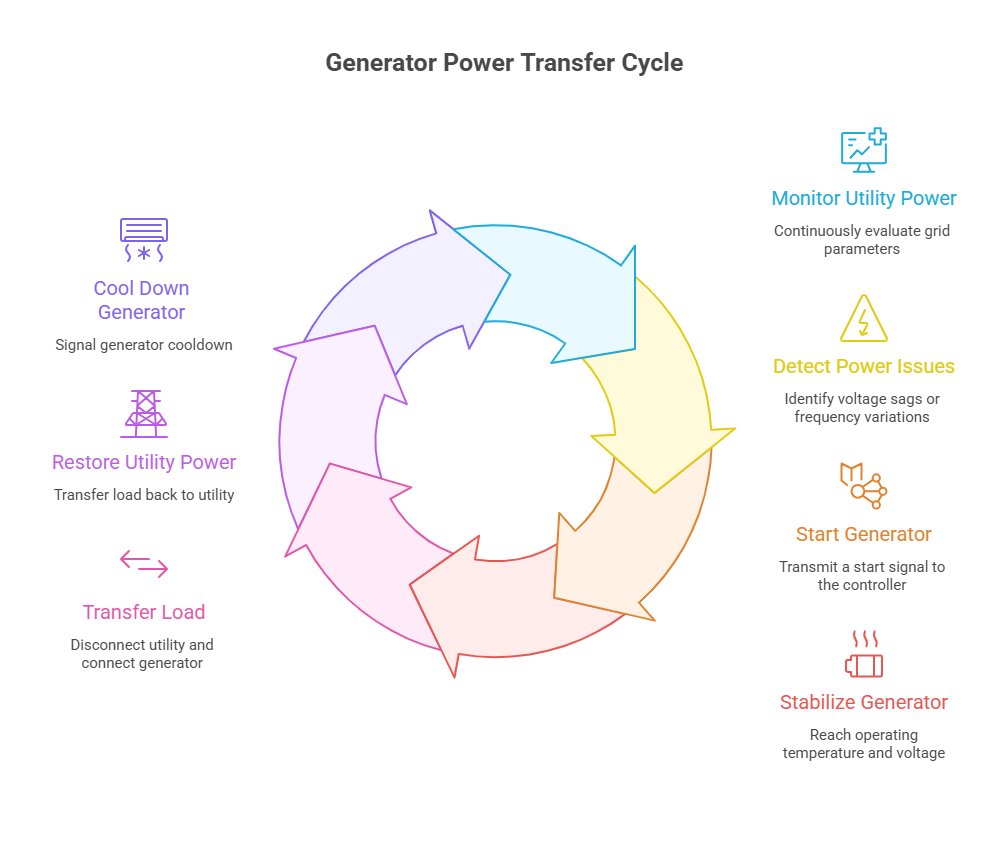
The effectiveness of generator automatic transfer technology lies in sophisticated monitoring capabilities. Modern units detect not only complete power loss but also voltage sags, frequency variations, and phase imbalances that could damage home electronics. Here is the operational sequence we explain to our Houston clients:
- Utility Monitoring: The ATS continuously evaluates grid voltage, frequency, and stability parameters.
- Engine Signal: Upon detecting unacceptable conditions, it transmits a start signal to the generator controller.
- Stabilization Period: The generator runs briefly to reach operating temperature and voltage stability.
- Load Transfer: The ATS moves electrical contacts to disconnect utility power and connect generator power.
- Utility Restoration: When grid power returns and stabilizes, the switch transfers load back to utility and signals generator cooldown.
This automated sequence forms the foundation of reliable standby generator operation. Without this technology, homeowners must manually connect power cables during adverse weather conditions.
Manual vs. Automatic Transfer Switch: Which is Best?
Evaluating whether additional investment in automatic transfer capability is justified depends on your specific circumstances. A manual versus automatic transfer switch comparison centers on availability and physical capability. Manual systems require your presence and ability to operate switching equipment.
In contrast, generator automatic transfer systems operate regardless of your location. This capability proves essential for protecting homes with security systems, medical equipment, or climate-sensitive environments. Modern systems often include connectivity features allowing remote monitoring of power status through mobile applications. For most Houston families, the convenience and reliability of automatic operation justify the additional investment over manual alternatives.
Transfer Switch Options for Homeowners
| Feature | Manual Transfer Switch | Automatic Transfer Switch (ATS) | Generator Interlock Kit |
| Operation | Physical lever operation required | Fully automated operation | Manual breaker manipulation |
| Response Time | 2–5 minutes | 10–30 seconds | 3–10 minutes |
| Safety Level | High (mechanical interlock) | High (electronic monitoring) | Moderate (user-dependent) |
| Circuit Coverage | 6–12 pre-selected circuits | Whole-panel or priority circuits | All panel circuits (with limitations) |
| Equipment Cost | $300 – $800 | $600 – $2,500 | $150 – $500 |
Expert Tips for Generator Transfer Switch Installation
Installing generator automatic transfer equipment is not appropriate for DIY execution. This work involves high-voltage connections requiring licensed electrical professionals. During installation, we integrate load management technology that coordinates with your generator capacity. This system prioritizes essential circuits—such as air conditioning and refrigeration—while managing overall demand to prevent generator overload.
We recently assisted a homeowner in the Heights who had attempted to use a generator interlock kit improperly with an undersized portable unit. The resulting overload created a hazardous situation that could have caused equipment damage or fire. Professional residential transfer switch installation in Houston includes comprehensive load analysis. We ensure your whole-house transfer switch is appropriately sized for your specific electrical demands and generator capacity.
Why Choose Energy Store Consulting for Your Setup?
At Energy Store Consulting, we specialize in the control systems that make backup power reliable. We have extensive experience with generator automatic transfer technology specifically configured for Houston’s climate and electrical environment. Our team maintains current knowledge of local building codes and manufacturer requirements for brands including Generac and Kohler.
Our approach extends beyond equipment mounting to complete system integration. From initial transfer switch cost estimation through final code inspection, we manage every project phase. We ensure your standby generator wiring configuration meets the highest standards for safety, functionality, and longevity. Trust technicians who understand that backup power reliability depends entirely on proper switching equipment.
Frequently Asked Questions
What is the average transfer switch cost in Houston?
Professional residential transfer switch installation in Houston typically ranges from $1,200 to $2,500, including equipment, labor, and necessary permits. Costs vary based on amperage rating, installation complexity, and selected features.
Does a whole-house transfer switch power everything at once?
Transfer capability depends on your generator’s rated capacity. Most generator automatic transfer installations incorporate load management technology that prioritizes essential circuits—such as HVAC and refrigeration—while cycling secondary loads to maintain system stability.
What is the difference between a generator interlock kit and a transfer switch?
An interlock kit is a mechanical device installed on your electrical panel that prevents simultaneous connection of utility and generator power. It requires manual operation. An automatic transfer switch provides fully automated operation with built-in safety monitoring and is significantly more convenient for regular use.
Can I add smart monitoring features to my existing generator?
Many standby generators can be retrofit with modern controllers or communication modules enabling remote monitoring and enhanced operational feedback. These upgrades improve system visibility and maintenance scheduling capabilities.
Why is an ATS standard for standby generators?
Automatic transfer switches are the industry standard because they eliminate manual intervention, ensure consistent response timing, and incorporate safety features preventing utility line energization (backfeeding). This protects utility workers and ensures code-compliant operation.
Upgrade to Seamless Power Today
Your backup power system is only as reliable as its switching equipment. Ensure your home maintains continuous power without interruption. Schedule your generator automatic transfer consultation with our expert team today. Contact Energy Store Consulting.
- Phone: 832-990-0672
- Website: https://energystoreconsulting.com/
- Address: 6723 Theall Rd, Suite C-2, Houston, TX