
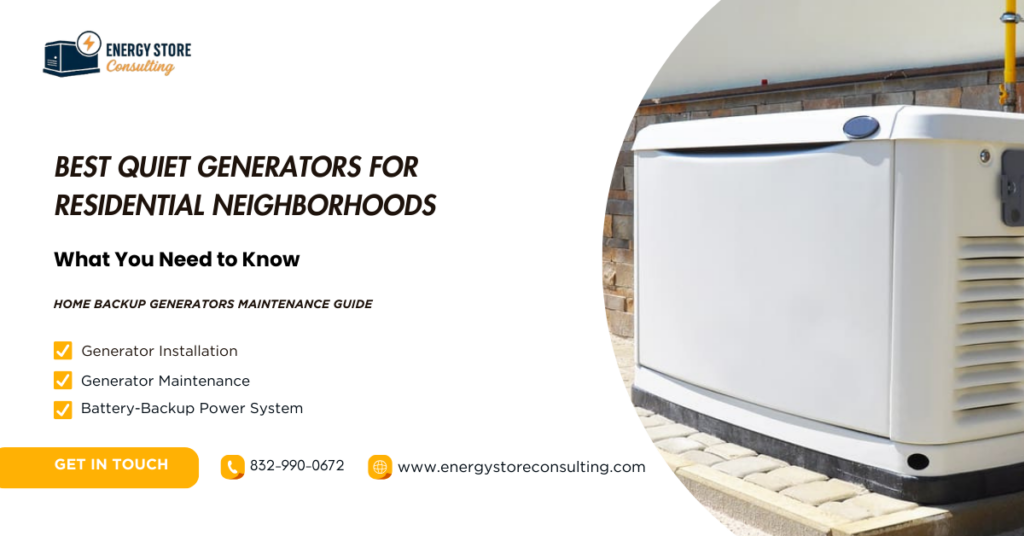
Choosing the right Generators for Residential Neighborhoods requires more than just power capacity. You need a system that provides dependable electricity while keeping noise levels low for nearby homes. Modern quiet generators for homes now feature improved sound insulation and advanced engine design. Homeowners in Houston and Kingwood often want backup power without disturbing neighbors during long outages. This guide explains how to choose the best low-noise standby generators for home, understand generator sound levels, and install the right quiet generator system for your property.
Quiet Backup Power Is Essential for Residential Neighborhoods
Power outages are common across the Houston area. Severe thunderstorms, hurricanes, and summer heat often push the electrical grid to its limits. When the power fails, many homeowners rely on backup generators to keep their homes safe and comfortable.
However, in residential communities, the noise level of home generators becomes an important factor. A loud generator can easily cross property lines and disrupt a neighborhood’s peaceful environment.
Modern manufacturers understand this concern. Companies such as Generac, Kohler, and Briggs & Stratton now design generators specifically for residential use. Their latest models include sound-reducing enclosures, improved mufflers, and balanced engines that operate far more quietly than older equipment.
After working with backup power systems for more than ten years, we have learned that homeowners want reliability without creating unnecessary noise. The right generators for residential neighborhoods can deliver full power protection while keeping the surrounding environment calm and comfortable.
The Expert Approach to Choosing Generators for Residential Neighborhoods
Many homeowners assume that all generators sound the same. In reality, the difference between models can be significant. Some older generators create a loud mechanical sound that carries across several homes, while modern units are designed to run much more quietly.
When we help homeowners select generators for residential neighborhoods, we focus on three main elements: generator design, installation placement, and engine efficiency.
A well-designed generator often runs at a lower engine speed, which helps reduce vibration and sound output. Many of the best low-decibel generators for home use operate at 50-65 decibels. This level is close to normal conversation, which makes the generator far less noticeable.
Installation location also plays a major role. Proper placement prevents sound from reflecting toward nearby houses. When we install generators in Houston communities, we carefully evaluate property layout, airflow, and building structures to minimize noise.
One homeowner in Kingwood recently asked us to install a generator, but was worried about disturbing the quiet street where they live. After evaluating the property, we recommended a quiet whole-house generator system and positioned the unit away from the main living spaces. The result was a powerful system that runs smoothly while remaining surprisingly quiet.
Comparing Generator Noise Levels for Residential Homes
Understanding the noise level of home generators can help you choose the right equipment. Sound is measured in decibels, often abbreviated as dB. The lower the decibel rating, the quieter the generator will operate.
| Generator Type | Typical Noise Level | Best Use Case |
| Portable Generator | 65–75 dB | Temporary backup during outages |
| Quiet Portable Generator | 55–65 dB | Small homes or short-term power |
| Standard Standby Generator | 60–70 dB | Whole-home automatic power |
| Quiet Whole House Generator System | 50–60 dB | Residential neighborhoods |
Many quiet portable generators for neighborhoods provide short-term electricity during outages. However, homeowners who want reliable automatic power usually prefer a standby system. These generators start automatically when utility power fails and continue running until power is restored.
Your Quiet Generator Installation Checklist
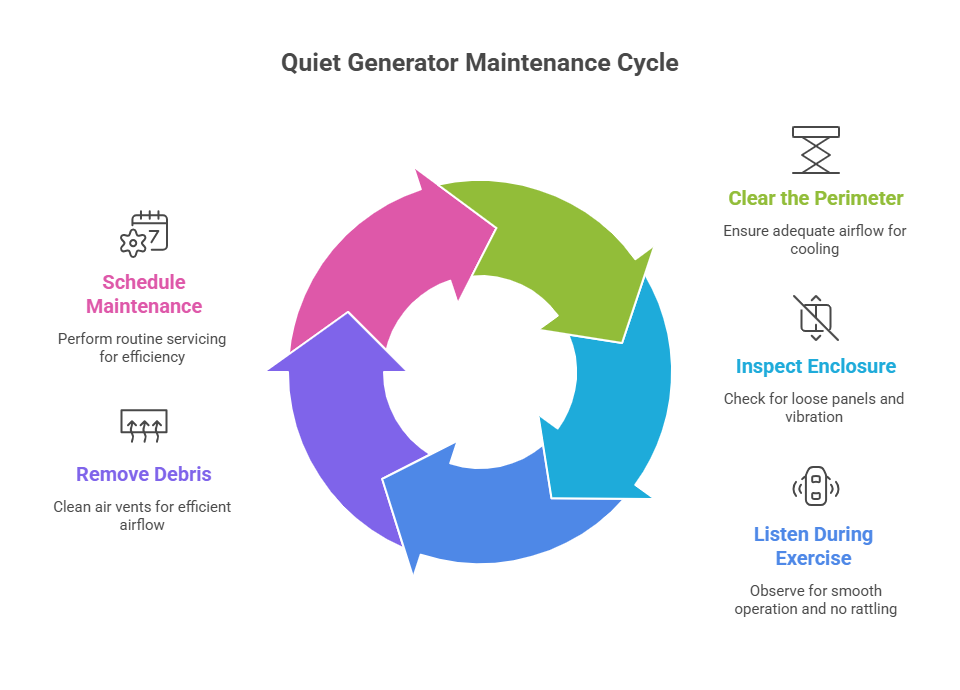
Several simple steps can help maintain quiet generator operation in a residential neighborhood. Homeowners can perform these checks regularly to ensure their system continues running efficiently.
- Clear the Perimeter: Keep at least three feet of open space around the generator so the engine can cool properly, and airflow remains unrestricted.
- Inspect the Generator Enclosure: Check for loose panels or areas of vibration that could increase sound levels.
- Listen During the Weekly Exercise Cycle: The generator should run smoothly during its self-test without unusual vibration or rattling.
- Remove Debris from Air Vents: Leaves, grass, and dirt can affect airflow and increase engine strain.
- Schedule Regular Maintenance: Routine servicing keeps the engine running smoothly and helps maintain quiet performance.
These simple steps help preserve the efficiency of modern quiet generators for the home.
Quiet Standby Generators for Houses
Standby generators remain the most dependable solution for residential backup power. These systems connect directly to your home’s electrical panel and automatically activate when the grid loses power.
Many homeowners choose quiet standby generators for houses because they provide seamless protection without manual setup. Once installed, the system monitors the electrical supply and activates within seconds during an outage.
Manufacturers design these generators with insulated housings that absorb sound and reduce vibration. The engines operate at balanced speeds to maintain smooth performance while keeping sound levels controlled.
At Energy Store Consulting, we regularly install low-noise standby generators for homes throughout Houston neighborhoods. Many homeowners tell us they are surprised at how quiet modern standby generators have become compared to older models.
Silent Home Backup Generator Technology
A completely silent generator does not exist because every engine produces some sound. However, modern silent home backup generator systems operate far more quietly than traditional generators.
Engineers now use advanced muffler systems, vibration isolators, and insulated enclosures to control sound. These features allow modern quiet whole-house generator systems to run smoothly even during long outages.
Lower engine speeds also help reduce mechanical noise. When combined with proper installation and placement, these features create a generator system that operates quietly enough for residential environments.
Understanding Generator Noise Regulations for Residential Areas
Local communities often maintain guidelines regarding equipment noise. Understanding generator noise regulations for residential areas helps homeowners install their systems responsibly.
Most residential neighborhoods allow generators as long as they operate within acceptable noise limits. Some homeowner associations also require specific placement distances from property lines.
Professional installation helps ensure compliance with these guidelines. When we install generators for residential neighborhoods, we carefully evaluate location, airflow, and structural layout to minimize sound impact.
Planning helps prevent potential issues and maintain positive relationships with neighbors.
Whole House Generator Service Cost
The cost of installing a quiet generator system depends on several factors, including power capacity, installation complexity, and fuel source.
Portable generators typically range from $700 to $2,000, depending on power output. Quiet portable models designed for residential environments may reach around $3,000.
Standby systems usually range from $7,000 to $15,000, including installation. Larger quiet whole-house generator systems designed for full property coverage may cost up to $20,000, depending on electrical requirements.
Although the investment may seem significant, a standby generator protects your home during extended outages and provides dependable electricity when the grid fails.
Quiet Generator Installation in Houston and Kingwood
Homes across the Houston and Kingwood region frequently experience power interruptions caused by hurricanes, severe storms, and extreme summer heat. Installing reliable generators in residential neighborhoods helps ensure your home stays comfortable during disruptions.
At Energy Store Consulting, we specialize in designing and installing backup power systems for both homes and businesses. Our team provides expert consultation, generator sizing, professional installation, and ongoing support for systems from Generac, Kohler, and Briggs & Stratton.
Because we operate locally, we understand the power challenges that Houston homeowners face. Our goal is to deliver reliable generator systems that provide dependable electricity while maintaining quiet operation in residential communities.
Frequently Asked Questions
What are the quietest generators for residential neighborhoods?
Modern standby generators with insulated enclosures and advanced mufflers are the quietest options. Many operate around 50–60 decibels.
How loud is a typical home generator?
The noise level of home generators usually ranges from 60 to 70 decibels, depending on the model.
Are generators allowed in residential neighborhoods?
Yes. Most areas allow generators, provided they comply with residential generator noise regulations and proper safety guidelines.
What is the best low-decibel generator for home use?
Many homeowners prefer Generac and Kohler standby systems because they combine reliable power output with quieter operation.
Can a whole-house generator run quietly?
Yes. A properly installed quiet whole-house generator system can run at sound levels close to normal conversation.
Protect Your Home with Expert Generator Solutions
Power outages can happen at any time in the Houston area. Installing reliable generators in residential neighborhoods helps ensure your home remains safe and comfortable during unexpected outages.
At Energy Store Consulting, we help homeowners select and install dependable backup power systems designed for quiet performance and long-term reliability. Our team will evaluate your property, recommend the best generator size, and professionally install the system.
Contact our team today to schedule your consultation and protect your home with a reliable backup power solution.
Energy Store Consulting
6723 Theall Rd, Suite C-2
Houston, TX
Phone: 832-990-0672
Email: service@energystoreconsulting.com
Website: https://energystoreconsulting.com