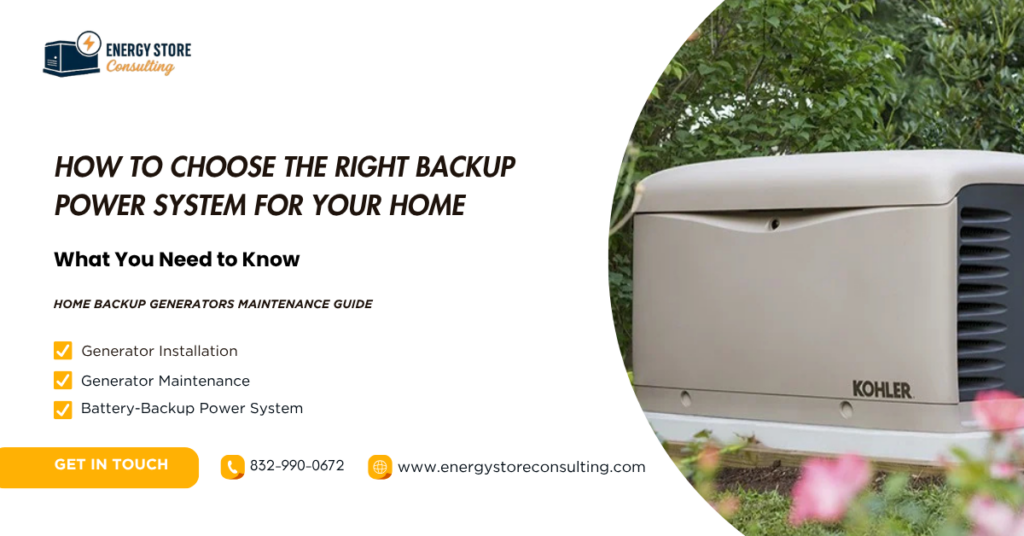
Learning how to choose the Right Backup Power System is one of the most important decisions a homeowner can make before the next power outage. Modern homes rely on electricity for comfort, security, and daily living. When the grid fails, the right backup solution keeps your lights, appliances, and essential systems running. Homeowners today can choose from several home backup power system options, including generators and battery storage. This guide explains how to compare systems, determine the correct size, and find the best backup power system for home protection.
Why Every Home Needs a Backup Power System
Power outages happen more often than most homeowners expect. Severe storms, grid overload, and extreme weather can interrupt electricity for hours or even days. In places like Houston and Kingwood, hurricanes and summer heat frequently cause widespread outages.
When the power shuts down, your home immediately loses access to air conditioning, refrigeration, lighting, and security systems. Families often realize how much they depend on electricity only after the power disappears.
That is why many homeowners begin searching for backup power systems for power outages after experiencing a blackout. Reliable home energy backup solutions protect your household from unexpected disruptions and provide peace of mind during severe weather.
After working with residential power systems for more than ten years, we have seen how the right backup system can transform the way homeowners respond to outages. Instead of worrying about food spoilage or indoor temperatures, families continue living comfortably while the rest of the neighborhood waits for the grid to recover.
The Expert Approach to Choosing the Right Backup Power System
When homeowners first research backup power, they often ask a simple question: Which system is the best?
The answer depends on your home’s energy needs, property layout, and outage risks. Choosing the right solution requires understanding your electrical demand and how long outages typically last in your area.
When we help homeowners choose the Right Backup Power System, we begin by reviewing the home’s energy consumption. Large homes with multiple air conditioners and heavy electrical loads often require whole-house backup power systems. Smaller homes may operate comfortably with a smaller generator or battery storage system.
For example, one homeowner in Kingwood contacted us after a storm left their home without power for almost two days. They initially planned to install a small portable generator. After evaluating their power needs, we recommended a standby generator capable of supporting the entire house. That decision provided reliable backup power during the next storm season.
Situations like this highlight why proper planning matters when selecting backup power solutions for residential homes.
Comparing Home Backup Power System Options
Homeowners today can choose from several home backup power system options depending on their power needs and budget.
| Backup System Type | Best Use | Key Advantage |
| Portable Generator | Small homes or temporary power | Affordable option |
| Standby Generator | Whole-home backup | Automatic operation |
| Battery Storage System | Essential appliances | Quiet and clean energy |
| Hybrid Generator + Battery | Extended outages | Long runtime with energy storage |
Many homeowners prefer standby generators because they provide reliable electricity during long outages. Battery systems offer quieter operation and require minimal maintenance.
Understanding these differences helps you choose the Right Backup Power System for your specific needs.
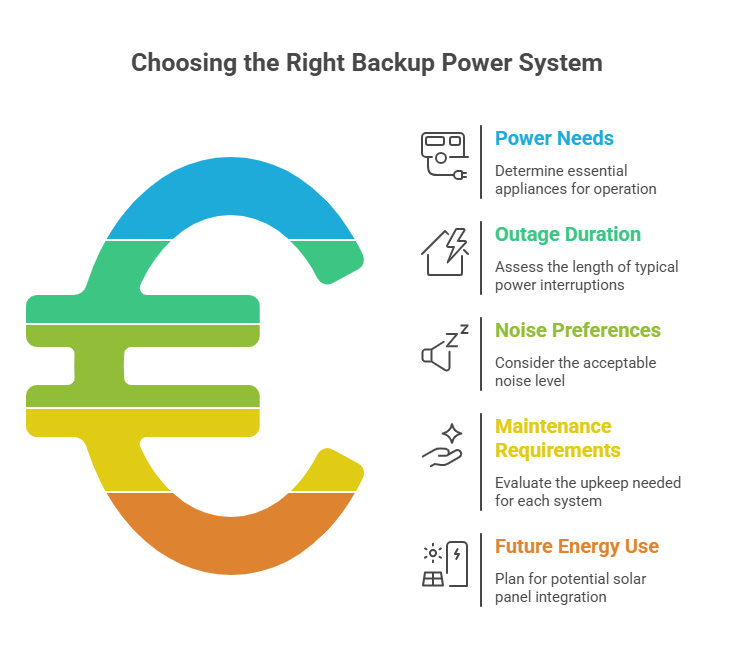
Simple Checklist for Choosing the Right Generator or Battery System
When evaluating a generator vs battery backup system for the home, several practical factors can guide your decision.
- Calculate Your Power Needs: Determine which appliances must operate during an outage.
- Consider Outage Duration: Long outages usually require generator support.
- Review Noise Preferences: Battery systems run silently while generators produce engine noise.
- Think About Maintenance: Generators require routine service while battery systems require minimal upkeep.
- Plan for Future Energy Use: Homes with solar panels often benefit from battery storage integration.
This checklist helps homeowners identify the best backup power system for home protection.
Whole House Backup Power Systems
Many homeowners want a system that powers the entire home during an outage. Whole-house backup power systems provide that level of protection.
These systems connect directly to your electrical panel and activate automatically when the grid fails. Within seconds, the generator restores power to your home.
Standby generators are the most common solution for full-home backup. These systems run on natural gas or propane and can operate for extended periods as long as fuel remains available.
For families living in regions with frequent storms, whole-home systems provide reliable backup power solutions for residential homes.
Choosing the Right Generator Size for Home
Selecting the correct generator size is one of the most important steps when installing backup power.
If the generator is too small, it may struggle to support essential appliances. If it is too large, you may spend more money than necessary.
When we help homeowners determine the correct system size, we evaluate the home’s electrical panel, major appliances, and overall power demand. Air conditioning systems, refrigerators, water heaters, and electric stoves all influence generator capacity.
Understanding these factors helps homeowners confidently approach choosing the right generator size for home power needs.
Battery vs Generator Backup System
Many homeowners compare battery vs generator backup system options before making a final decision.
Battery systems store electricity and deliver power instantly when an outage occurs. These systems operate silently and require very little maintenance.
Generators create electricity using fuel and can operate continuously as long as fuel remains available. This capability makes generators ideal for extended outages.
Some homeowners combine both technologies to create hybrid energy systems. A generator can recharge the battery during long outages, which creates a powerful and flexible home energy backup solution.
Cost of Backup Power Systems for Homes
Cost plays an important role when homeowners evaluate backup power systems for power outages.
Portable generators often cost between $700 and $2,000, depending on size. Standby generators designed for full-home protection usually range from $8,000 to $20,000, including installation.
Battery storage systems typically begin around $7,000 and increase depending on storage capacity.
Although backup power systems require an initial investment, many homeowners consider them essential after experiencing a long outage. Reliable electricity protects your home, improves comfort, and ensures safety during emergencies.
Backup Power Solutions in Houston and Kingwood
Homes in Houston and Kingwood frequently experience power interruptions caused by severe weather and high energy demand. Choosing the right system helps homeowners stay prepared for these situations.
At Energy Store Consulting, we specialize in designing reliable backup power solutions for residential homes. Our team provides consultation, generator sizing, installation, and long-term support for trusted brands including Generac, Kohler, and Briggs & Stratton.
Because we work locally, we understand the unique power challenges that homeowners face in the Houston region. Our goal is to help you choose the Right Backup Power System so your home remains safe and comfortable during outages.
Frequently Asked Questions
What is the best backup power system for home use?
The best backup power system for a home depends on energy demand, outage duration, and homeowner preferences.
How do I choose a backup power system for my home?
Start by evaluating energy needs, outage risks, and budget before selecting a generator or battery system.
Is a generator better than a battery backup system?
Generators work better for long outages, while battery systems provide silent power for short outages.
How large should a home generator be?
Generator size depends on the total wattage of essential appliances in your home.
Can battery systems power an entire home?
Large battery systems can support many appliances, but whole-home coverage usually requires multiple battery modules.
Protect Your Home with Reliable Backup Power
Learning how to choose the Right Backup Power System helps protect your home from unexpected outages. With the right system in place, you can keep your family comfortable and safe during severe weather or grid failures.
At Energy Store Consulting, we help homeowners across Houston and Kingwood select and install dependable backup power solutions. Our experienced team evaluates your home, recommends the best system size, and installs reliable equipment designed for long-term performance.
Contact us today to schedule your consultation.
Energy Store Consulting
6723 Theall Rd, Suite C-2
Houston, TX
Phone: 832-990-0672
Email: service@energystoreconsulting.com
Website: https://energystoreconsulting.com