
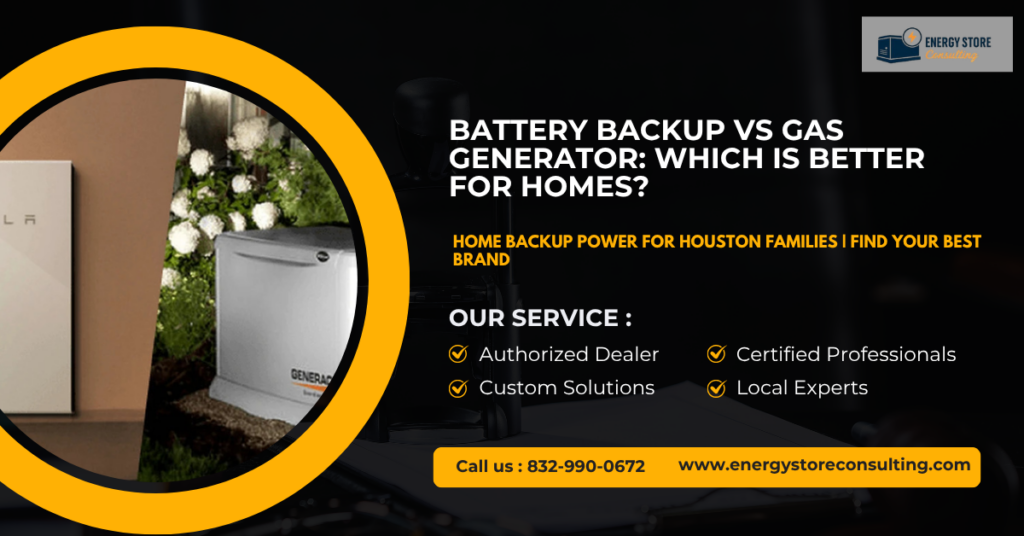
Choosing between Battery Backup vs Gas Generator is one of the most common questions homeowners ask when planning backup power. Both systems protect your home during outages, but they operate in very different ways. A battery backup stores electricity and runs silently, while a gas generator produces power using fuel. Many homeowners compare a generator vs. a battery backup system for the home to find the most reliable option for their needs. In this guide, you will learn the differences, advantages, and real-world performance of battery backup vs standby generator systems so you can choose the best backup power solution for your home.
Why Homeowners Compare Battery Backup vs Gas Generator
Power outages in places like Houston and Kingwood happen more often than many people expect. Severe storms, hurricanes, and high summer energy demand regularly stress the electrical grid. When your power shuts off for several hours, or sometimes days, backup power becomes more than just a convenience.
Many homeowners begin researching battery backup vs gas generator options after experiencing a major outage. They want a reliable system that keeps essential appliances running, protects food in refrigerators, and maintains indoor comfort during extreme weather.
From our experience working with backup power systems for more than ten years, most homeowners want a solution that provides reliability, easy operation, and long-term value. Some prefer the quiet operation of a battery system. Others prefer the unlimited runtime of a generator.
Understanding the strengths of both technologies helps you determine the best backup power system for homes.
The Expert Perspective on Home Backup Power
When we speak with homeowners about battery backup vs gas generator, the conversation usually begins with a simple goal: keeping the home powered during emergencies.
However, the right system depends on how much electricity your home uses during an outage. Smaller homes with modest energy needs often benefit from battery systems. Larger homes with multiple air conditioners and heavy electrical demand usually rely on standby generators.
We often explain this comparison using a practical example. A homeowner in Houston recently asked us about installing a battery system instead of a generator. After reviewing the home’s energy consumption, we discovered the house required significant power during summer outages. Because of that demand, we recommended a standby generator supported by a smaller battery storage system.
That hybrid setup created a reliable solution that balanced clean energy storage with long-term backup capability. Situations like this show why comparing home energy storage vs generator solutions is so important before installation.
Battery Backup vs Gas Generator: Key Differences
Understanding the differences between these two systems helps homeowners make an informed decision.
| Feature | Battery Backup System | Gas Generator |
| Power Source | Stored electricity | Gas or propane fuel |
| Noise Level | Silent operation | Engine noise during operation |
| Maintenance | Very low | Requires regular servicing |
| Runtime | Limited by battery capacity | Unlimited with fuel supply |
| Startup | Instant automatic power | Automatic for standby generators |
| Best Use | Short outages or essential loads | Long outages or whole-home power |
This comparison shows why many homeowners carefully evaluate battery backup vs gas generator before installing a system.
Quick Checklist for Choosing the Right Backup System
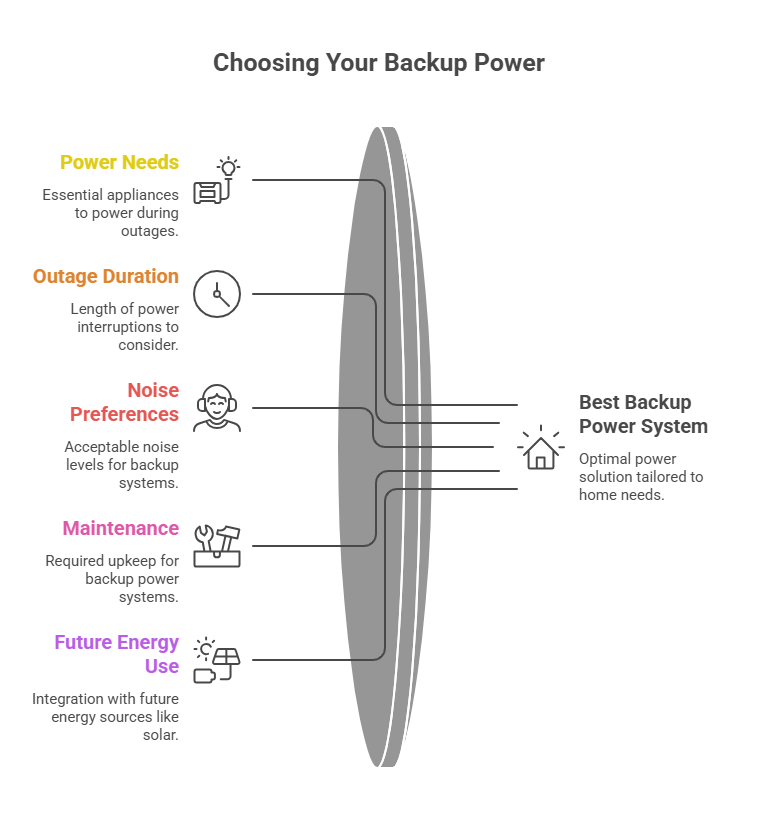
Choosing between a generator and a battery backup system for your home becomes easier when you consider your home’s specific needs.
- Evaluate Your Power Needs: Determine which appliances you want running during an outage.
- Consider Outage Duration: Long outages often favor generators, while shorter outages work well with batteries.
- Review Noise Preferences: Battery systems operate silently while generators produce engine sound.
- Think About Maintenance: Generators require regular service while battery systems require minimal upkeep.
- Plan for Future Energy Use: Homes with solar panels often integrate battery storage easily.
This checklist helps homeowners narrow down the best backup power system for their homes based on their priorities.
Battery Backup Systems for Residential Homes
Battery storage technology has improved significantly over the past decade. Modern battery-powered backup vs fuel generator comparisons often highlight how quiet and efficient battery systems have become.
Battery systems store electricity and deliver it instantly during an outage. Because the system does not rely on an engine, the operation remains completely silent.
Many homeowners choose battery systems because they require little maintenance. There are no oil changes, no fuel storage, and no mechanical components constantly running.
However, battery systems have a key limitation. The runtime depends entirely on stored energy capacity. Once the battery reaches a low charge level, the system must recharge before it can continue powering the home.
For homes that only need to run essential appliances during short outages, batteries can serve as a practical generator alternative for home backup power.
Gas Generators for Home Backup Power
Gas generators remain one of the most reliable backup power solutions available today. These systems generate electricity using natural gas, propane, or gasoline fuel.
A standby generator connects directly to your electrical panel and activates automatically when utility power fails. Because the generator produces electricity continuously while fuel remains available, it can power the home for extended outages.
Many homeowners prefer generators because they provide reliable power even during multi-day outages. In regions like Houston, where hurricanes can disrupt power for long periods, this reliability becomes extremely valuable.
This is why many homeowners still favor battery backup vs standby generator comparisons that lean toward generators when long-term reliability is the priority.
Pros and Cons of Battery Backup Systems
When comparing the pros and cons of battery backup systems, several important factors stand out.
Battery systems operate quietly and produce no emissions. They require very little maintenance and integrate easily with solar panels. Many homeowners appreciate the clean and modern technology.
However, the biggest limitation is energy storage capacity. Batteries only supply electricity until the stored power runs out.
For this reason, homeowners with large energy needs often combine battery systems with generators for a balanced backup power strategy.
Home Energy Storage vs Generator Cost
Cost often influences the final decision when comparing home energy storage vs generator solutions.
Small battery storage systems usually begin around $7,000. Larger systems designed to power significant portions of the home can exceed $15,000 or more, depending on energy capacity.
Standby generators typically range between $8,000 and $20,000, depending on size and installation complexity.
Although prices vary, homeowners should focus on reliability rather than cost alone. The right backup power system protects your home during emergencies and provides long-term peace of mind.
Backup Power Solutions in Houston and Kingwood
Homes in Houston and Kingwood frequently face power interruptions caused by severe weather and high electricity demand. Choosing the right system between a battery backup and a gas generator helps protect your home from these disruptions.
At Energy Store Consulting, we specialize in designing reliable backup power solutions for both residential and commercial properties. Our team provides consultation, system sizing, installation, and long-term support for generator and energy storage systems.
Because we work locally, we understand the power reliability challenges homeowners face in the Houston region. Our goal is to help you choose the backup solution that keeps your home safe, comfortable, and powered during outages.
Frequently Asked Questions
Which is better: battery backup or gas generator?
The answer depends on your needs. Batteries work well for short outages, while generators provide longer runtime for extended power failures.
How long do home battery systems last during an outage?
Most battery systems power essential appliances for several hours, depending on storage capacity.
Are battery backup systems quieter than generators?
Yes. Battery systems operate silently because they do not use an engine.
Can I combine battery storage with a generator?
Yes. Many homeowners install hybrid systems that combine both technologies for maximum reliability.
What is the best backup power system for homes?
The best backup power system for homes depends on energy demand, outage duration, and homeowner preferences.
Protect Your Home with Reliable Backup Power
Choosing between Battery Backup vs Gas Generator requires careful planning and expert guidance. The right solution depends on your home’s energy needs, outage risks, and long-term power goals.
At Energy Store Consulting, we help homeowners across Houston and Kingwood design dependable backup power systems that keep homes running during emergencies. Our experienced team evaluates your property, recommends the right system, and installs reliable backup solutions you can trust. Contact our team today to discuss the best backup power option for your home.
Energy Store Consulting
6723 Theall Rd, Suite C-2
Houston, TX
Phone: 832-990-0672
Email: service@energystoreconsulting.com
Website: https://energystoreconsulting.com