
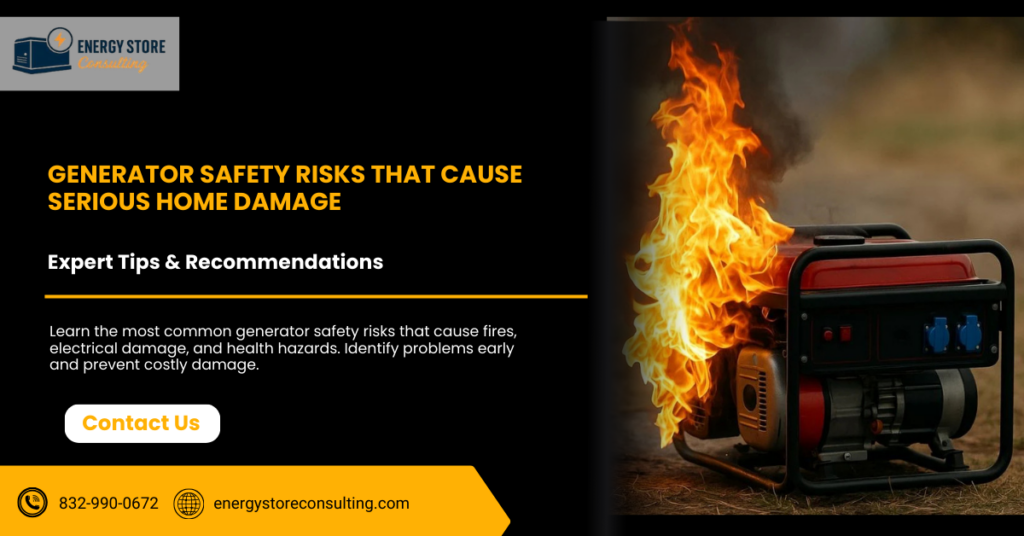
Generator Safety Risks: How to Protect Your Houston Home and Family
A generator is a lifeline during a blackout, but it can also become a significant liability if handled incorrectly. Every year, generator safety risks lead to preventable house fires, carbon monoxide poisoning, and severe electrical damage. In Houston, the high humidity and densely packed residential areas like Sugar Land and Katy further complicate safety protocols. At Energy Store Consulting, our mission is to provide more than just power; we provide peace of mind through expert installation and safety education. This guide explores the most critical hazards and how you can avoid them with professional planning.
The Hidden Dangers of DIY Generator Setups in Houston
In my decade of experience as an energy consultant in Houston, I’ve seen many homeowners attempt to bypass safety for the sake of convenience or cost. One of the most common improper generator installation risks is poor placement. I once consulted with a family in Cypress who had placed their portable unit in their garage with the door partially open. Within an hour, their indoor carbon monoxide alarms were screaming.
Safety isn’t just about having a working unit; it’s about understanding the environment in which it operates. Our local Houston codes exist to prevent these exact scenarios. When you choose a professional setup for your standby generator, you aren’t just paying for labor—you’re investing in a system designed to keep exhaust, fuel, and electricity exactly where they belong.
Critical Generator Safety Hazards & Prevention
Understanding the specific risks allows you to take proactive steps to mitigate them. Use the table below to recognize the primary hazards associated with residential generators:
| Hazard Type | Common Cause | Severity | Safety Solution |
| Carbon Monoxide | Unit too close to windows/doors | Life-Threatening | Install 20+ feet from the home |
| Electrical Fire | Overloaded circuits/Poor wiring | High Property Damage | Use an Automatic Transfer Switch |
| Explosion Risk | Fuel leaks or poor gas pressure | Catastrophic | Annual professional inspections |
| Backfeeding | Plugging the generator into the wall outlet | Fatal for Utility Workers | Never plug directly into an outlet |
| Electrocution | Operating in wet conditions, Rain | Moderate to Fatal | Use weather-sealed enclosures |
The Silent Killer: Carbon Monoxide Poisoning
Carbon monoxide poisoning is the leading cause of generator-related fatalities in the United States. CO is colorless, odorless, and tasteless, making it impossible to detect without specialized equipment.
Safe Distance: Never operate a generator in a garage, basement, or near an open window.
Exhaust Direction: Ensure the exhaust pipe points away from any residential structures.
Alarms: Always maintain working CO detectors on every level of your home, especially near sleeping areas.
Generator Fire & Explosion Risks
Fuel is the heart of your generator, but it’s also a volatile fire hazard. Generator fire hazards often occur during refueling (for portable units) or due to neglected gas line maintenance (for standby units).
Refueling Safety: Never refuel a hot generator. Spilled gas on a hot engine is a recipe for an immediate fire.
Standby Gas Lines: For systems running on natural gas or propane, a professional must verify the pressure and integrity of the lines. A small leak can lead to a gas buildup and a subsequent generator explosion risk.
Clearance: Maintain a 5-foot clearance from combustible materials like dry mulch, wooden fences, or siding.
Why “Backfeeding” is a Fatal Mistake
Generator backfeeding danger occurs when someone tries to power their house by plugging a generator into a standard wall outlet. This sends electricity back into the utility lines, which can electrocute utility workers trying to restore power. It also bypasses your home’s circuit breakers, creating a massive fire risk inside your walls. The only safe way to connect a generator to your home is through a professionally installed transfer switch.
How Houston’s Weather Multiplies Safety Risks
Houston’s climate adds unique layers to generator safety.
Heat & Ventilation: Our 100-degree summers mean generators can easily overheat. Proper generator ventilation risks must be managed by ensuring the unit has at least three feet of open space on all sides.
Flood Zones: In flood-prone areas like Meyerland, generators must be installed on elevated pads to prevent water from reaching electrical components, which could cause a short circuit or electrocution.
Salt Air: For homes near the coast, salt air can corrode electrical connections faster, increasing the chance of an electrical arc and fire.
Frequently Asked Questions About Generator Safety
Is it safe to run my generator in the rain?
Portable generators should never be run in the rain unless they are under a specialized “generator tent.” Standby generators are safe because they come in weather-protected, NEMA-rated enclosures.
How far should a generator be from my house?
The general rule is at least 20 feet for portable units. Standby units can be closer (typically 5–18 inches from the wall) because they are permanently installed and vented according to strict building codes.
Can a generator damage my electronics?
Yes. If the generator doesn’t have a stable voltage regulator (Total Harmonic Distortion < 5%), it can “fry” sensitive electronics like laptops and smart TVs.
Why does my generator smell like rotten eggs?
If you have a natural gas unit, this indicates a gas leak. Shut off the unit and the gas supply immediately and call a professional.
How do I prevent my generator from backfeeding?
The only way to 100% prevent backfeeding is by using a licensed electrician to install a manual or automatic transfer switch.
Schedule a Safety Consultation with Energy Store Consulting
Safety is not a DIY project. At Energy Store Consulting, we specialize in identifying and eliminating generator safety risks before they become emergencies. Whether you need a safety audit of your current system or a professional routine generator maintenance plan, our Houston-based team is here to help.
Don’t leave your family’s safety to chance. Contact us today for a comprehensive generator safety inspection!
Contact Information
Phone: 832-990-0672
Address: 6723 Theall Rd, Suite C-2, Houston, TX
Website: energystoreconsulting.com